
If You Spent Every Weekend in JB for a Year, How Much Would You Save?
- Algyn Teo
- Oct 7, 2025
- 3 min read

It starts innocently. One weekend you decide to pop over to JB for a quick dinner. The next weekend you find yourself getting a car wash, a massage and stocking up on Milo at Lotus. Before you know it, crossing the Causeway has become a weekly ritual. But here’s the million-dollar question.
If you spent every weekend in JB for a whole year, how much could you actually save?
Let’s break it down like a typical Singaporean weekend warrior. We’ll keep things simple, casual, and slightly cheeky.

Food: Cheaper and Tastier
Say you and your family of four usually eat out in Singapore every weekend. A typical restaurant meal might cost around $80 to $100 including drinks and service charge.
Now switch that to JB. You could easily enjoy a hearty seafood feast, generous portions of chicken rice or steamboat and drinks for the same group at around RM120 to RM150, which converts to about $35 to $45. Multiply that difference over 52 weekends and you’re looking at roughly $2,500 to $3,000 in savings just from dining out alone.
And that doesn’t even factor in the joy of getting kopi that still tastes like kopi for RM2.50 instead of paying $2.50 for a cup that tastes suspiciously like hot water with a tan.
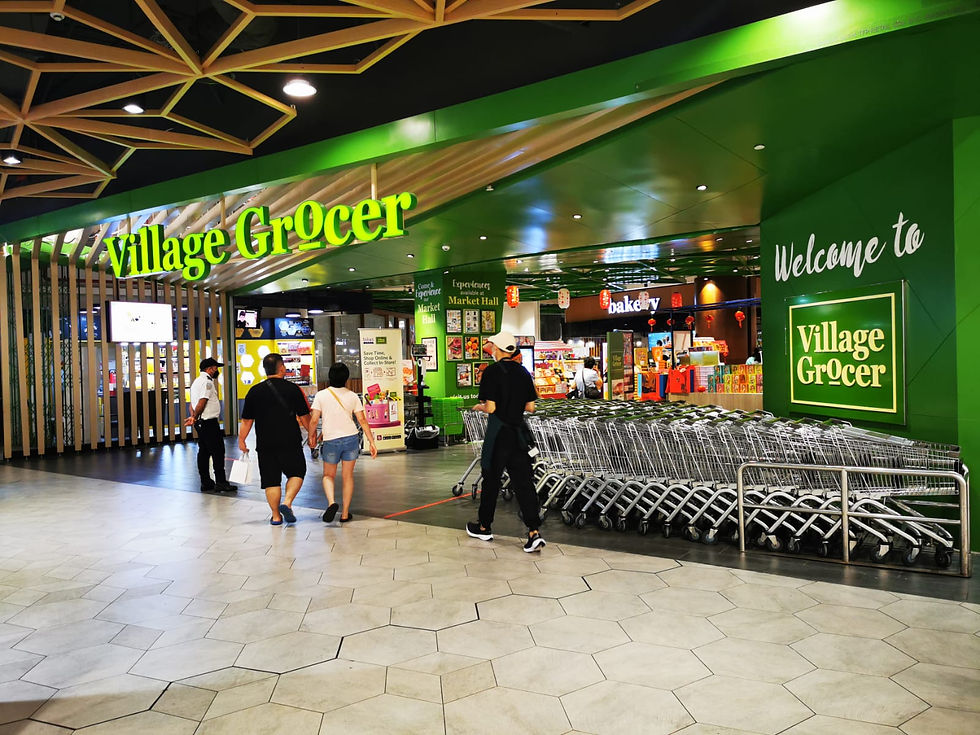
Groceries and Essentials: The Stock-Up Strategy
Many Singaporeans use JB weekends as grocery stock-up missions. Items like poultry, fresh vegetables, snacks, detergent, and household goods are consistently cheaper. A family might easily save $40 to $60 a trip if they buy strategically.
Do that every weekend and the total savings could hit $2,000 to $3,000 a year. Some families make this a sport, complete with trolley strategies and trunk-organizing techniques that would make the SAF proud.
Services: Car Washes, Massages, Opticians
Here’s where things get fun. A full car wash and vacuum in JB typically costs about RM20 to RM30. In Singapore, you’d pay at least $15 to $20 for the same service. Weekly car washes in JB could save you around $600 a year. Add in a monthly massage at JB prices, which are often a third of what you’d pay back home, and you might shave off another $500 to $800 annually.
Optician visits are another popular hack. Many Singaporeans replace their glasses or contact lenses in JB because lenses and frames can cost half of Singapore prices. If you upgrade specs once a year for the whole family, that could be a few hundred more saved.

Entertainment: More Bang for Your Buck
Weekend entertainment in Singapore adds up fast. A movie, snacks and supper for four can easily cost $80. In JB, that same outing is often under half the price. Family KTV, go-karting or café hopping are all significantly cheaper too.
Conservatively, if you do one fun activity per weekend in JB instead of SG, you might save another $1,500 to $2,000 a year.
Total Savings
Let’s tally it up.
Food: $2,500 to $3,000
Groceries: $2,000 to $3,000
Services: $1,000 to $1,500
Entertainment: $1,500 to $2,000
You’re looking at an estimated $7,000 to $9,500 in annual savings for a typical family just by spending weekends in JB instead of Singapore. And that’s not counting bonus savings from petrol, haircuts, dental visits or the occasional car servicing.
The Bigger Picture
Of course, not every trip to JB is about saving money. There’s the slower pace, the change of scenery and the small joys of finding your favorite dim sum place or hidden café. But when the cost of living keeps rising in Singapore, these weekend getaways double up as a smart financial move.
So if you’ve been making JB trips here and there, imagine what 52 weekends could do for your wallet. It’s not just a mini holiday. It’s a quiet, steady savings machine.
Although the Malaysian ringgit has been appreciating against the Singapore dollar, reaching around RM3.26 to SGD1, the exchange rate remains quite favorable for Singaporeans. Even with the stronger ringgit, the overall cost of goods and services in Johor Bahru is still significantly lower compared to Singapore.
Everyday essentials like food, groceries, dining, services, and entertainment continue to offer meaningful savings once converted, making JB trips financially attractive despite the currency shift. In short, while the gap has narrowed slightly, it’s still a good deal.
And the best part? You get to enjoy good food, cheap massages, clean cars and kopi that tastes like it should. Not a bad way to keep your costs down.
Disclaimer:
All cost estimates and savings figures in this article are based on general price comparisons and typical spending patterns at the time of writing. Actual prices may vary depending on location, time, exchange rates, personal habits, and market changes. This article is intended for informational and entertainment purposes only and does not constitute financial advice. Readers are encouraged to do their own research and exercise discretion before making any financial decisions.


Comments